

Everyone wants to make money in crypto.
Few think about how not to lose it.
The truth is, most people don’t go broke because their coin failed, they go broke because the infrastructure itself failed them.
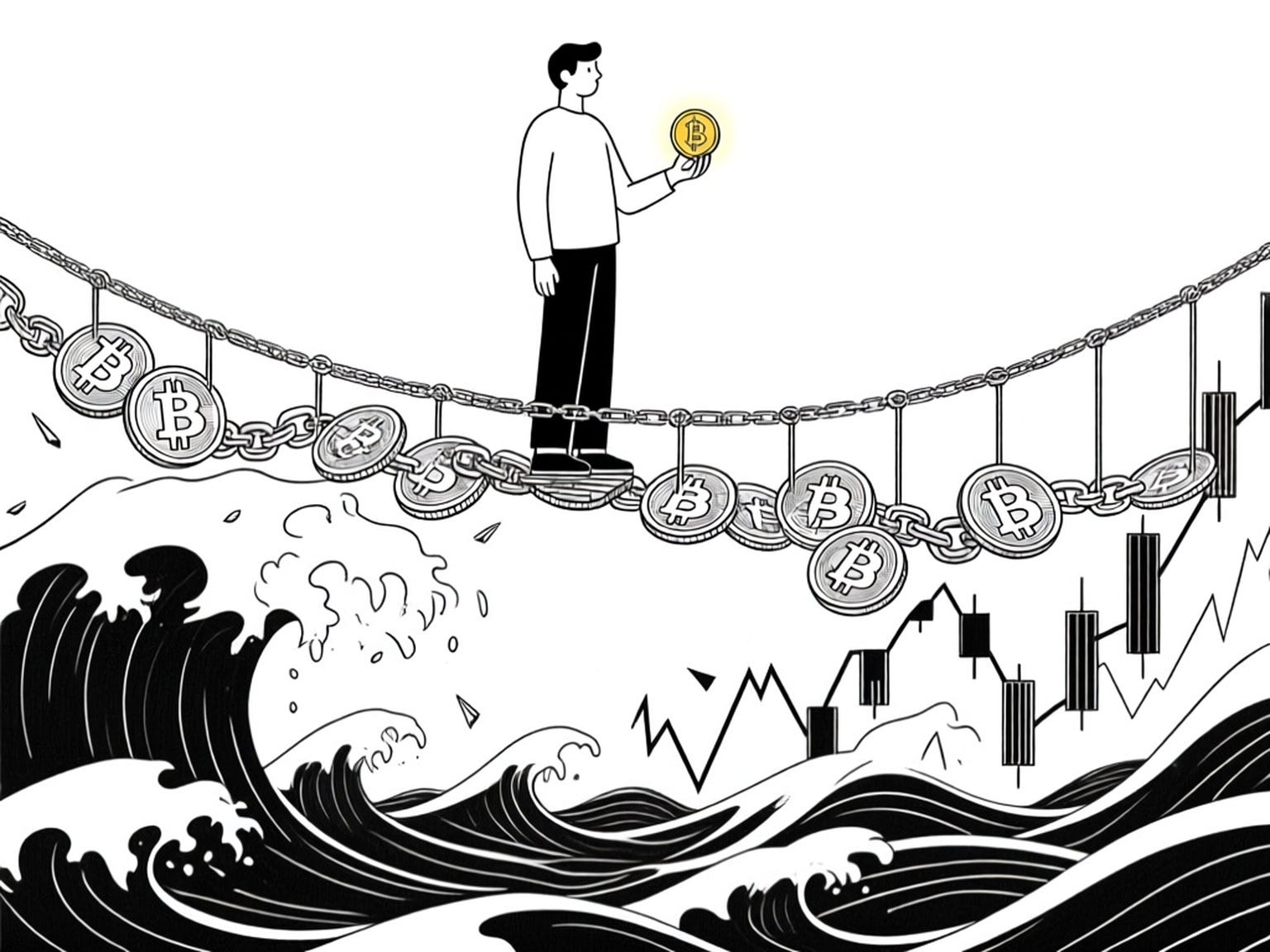
The problem isn’t just bad projects or bear markets. It’s that crypto is built on a system that’s both fragmented and tightly connected, a setup where one platform’s mistake can wipe out everyone else’s users.
Here’s how to keep your life savings safe when the next meltdown hits.
1. Don’t trust “islands”; everything is connected.
Exchanges and protocols might look separate, but they’re all plugged into the same network of oracles, liquidity routes, and traders running cross-platform strategies.
When one breaks, it can trigger chain reactions across the ecosystem.
Don’t keep all your funds on a single platform. Spread risk across different custodians and chains. If you’re using DeFi, understand where your oracle data and liquidity actually come from because if they fail, your portfolio does too.
2. Beware of low-liquidity venues.
Low liquidity makes prices swing harder and when things move too fast, margin calls and liquidations snowball.
That’s how you can see a token crash on one exchange and then ripple through others.
Trade or hold assets where liquidity is deep. If you’re parking funds on a smaller venue for yield, remember: if no one’s around to buy when things go south, you’re trapped.
3. Don’t depend blindly on oracles.
Prices in DeFi come from oracles. When they’re wrong due to manipulation or technical failure protocols can break instantly.
We’ve seen how a single faulty feed can cause massive losses or artificial depegs.
Prefer platforms using diverse price feeds and transparent oracle systems. If you can’t see where price data comes from, you can’t trust it.
4. Understand how your exchange manages risk.
Auto-deleveraging (ADL) and circuit breakers are supposed to protect markets but when poorly designed, they can do the opposite.
Imagine you’re shorting ETH to hedge your income, and an exchange’s ADL kicks you out during volatility. Suddenly, your hedge is gone and your real-world income is exposed.
If you’re trading on leverage, read how your exchange handles liquidations and ADL. If that info isn’t public, that’s your red flag. Opaque systems mean you’re taking invisible risks.
5. Market makers aren’t your safety net.
They keep markets alive until they don’t.
When a market maker stops providing liquidity, prices can crash to zero in seconds. The worst part? They’re accountable only to exchanges and token issuers, not to you.
Check whether the project or exchange publicly discloses its market makers. Avoid platforms with no transparency because when they vanish, so does your exit.
6. Expect contagion, plan for it.
Crypto venues borrow liquidity, copy price feeds, and route trades through each other. So when one exchange goes down or freezes, others often follow.
Even a safety mechanism like ADL on one venue can push leverage to another, triggering a chain reaction.
Assume every platform is exposed to every other one. Keep emergency liquidity cash or stablecoins off-exchange. Don’t rely on being able to withdraw “just in time.” When contagion hits, it’s already too late.
7. Push for standards, it protects everyone.
The real fix isn’t luck or regulation, it’s consistency.
The system needs shared rules for risk, margin, and price data. Without them, everyone’s building on shifting sand.
Support platforms and projects that are open about their risk frameworks, oracle sources, and market maker relationships. Transparency isn’t a buzzword, it’s your insurance policy.
Crypto’s biggest risk isn’t volatility, it’s infrastructure fragility.
You can’t control how exchanges manage liquidity or how oracles transmit prices, but you can control your exposure to those failures.
The next meltdown won’t start where you expect but if you understand how the pipes are connected, you won’t be the one losing everything when the system cracks.
Get a quote for your project, schedule a call with our team, sign up for our newsletter, and follow us on X to stay updated.