

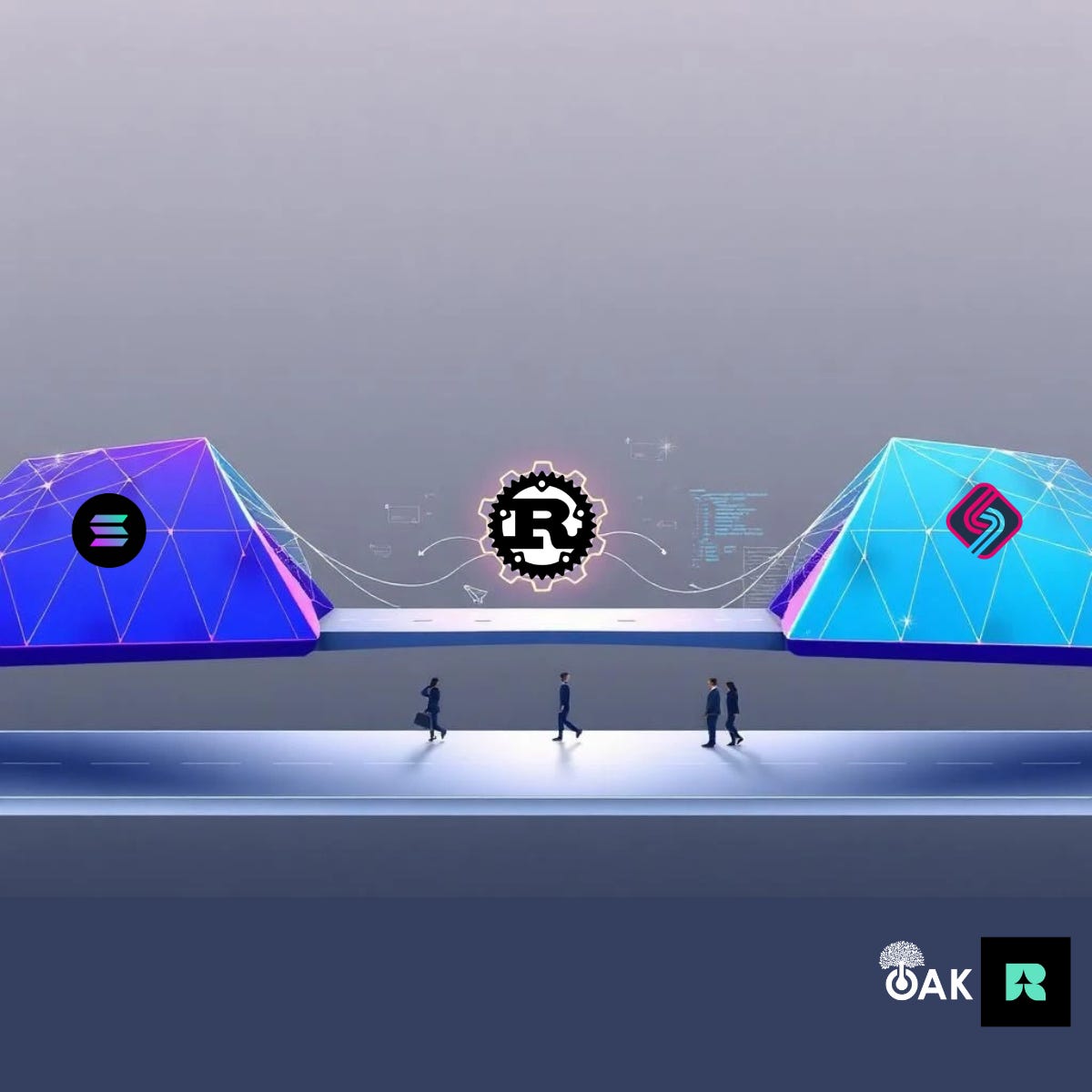
Arbitrum’s Stylus environment has opened the door for smart contracts written in languages like Rust and C++ on Arbitrum, Ethereum’s leading Layer-2. This unique WebAssembly (WASM) engine runs alongside the EVM, enabling developers to use more efficient languages with superior tooling, package ecosystems as well as tapping into a vastly larger talent pool of millions of Rust/C++ developers compared to roughly 20,000 Solidity devs. In fact, Stylus can execute complex on-chain computations with over 10× cheaper processing (and even 100× cheaper memory access) than the EVM, making previously impractical use cases possible.
Teams from ecosystems like Solana’s Rust-based platform are eager to leverage Stylus for accessing Ethereum’s liquidity and user base without re-writing their application in EVM languages like Solidity. Recent case studies demonstrate Stylus enabling advanced DeFi features previously infeasible or economically unviable on other chains due to its low-cost computation and rich Rust library ecosystem. Porting a project to Stylus offers substantial benefits in speed, cost-efficiency, and developer experience.
Why Port to Arbitrum’s Stylus?
Stylus presents a compelling opportunity for Solana developers to expand into Ethereum without abandoning Rust. Stylus contracts maintain interoperability with existing Ethereum contracts, allowing projects to join Arbitrum without fragmenting liquidity or composability. Developers also benefit from Rust's safety features and Arbitrum’s throughput and security. With Stylus, complex on-chain computations become cost-effective without requiring the developer to drop down to arcane EVM assembly that is difficult to maintain and costly to audit.
However, migrating code from Solana to Stylus is challenging due to significant differences between Solana’s stateless programming model and Arbitrum’s EVM and WASM model. Until now, developers lacked structured guidance, relying instead on community blog posts and basic tutorials for cross-ecosystem migrations. This gap in tooling and documentation made migrations error-prone and daunting.
StylusPort: Making Migration from Solana Easier
StylusPort aims to simplify migrating Solana programs to Arbitrum Stylus, reducing friction by an order of magnitude. It provides end-to-end support through two core components:
Comprehensive Migration Handbook
A detailed technical guide covering all aspects of migrating a Solana program to a Stylus program, covering both framework-less approaches and the popular Anchor framework. It highlights core differences between Solana’s SeaLevel runtime and Arbitrum’s Stylus (WASM) environment, outlining clear migration patterns. With practical examples and case studies, the guide translates essential Solana concepts like PDAs and CPI calls into their Stylus counterparts, emphasizing critical security best practices at each step.
StylusPort CLI (AI Assistant)
An AI-powered command-line tool trained on the migration handbook, providing real-time, context-specific assistance. Developers can quickly resolve common challenges, such as converting Anchor instructions into Stylus-compatible functions or creating Rust templates for Solana-style accounts. The CLI acts as a knowledgeable co-pilot, drastically reducing migration complexity and accelerating the development process.
Simplified Adoption Spurs Growth
By integrating comprehensive documentation and interactive tooling, StylusPort significantly cuts down migration time, enabling Solana developers to rapidly and safely deploy on Arbitrum. This streamlined approach reduces bugs and optimizes new deployments, ultimately fostering quicker adoption and growth in the Stylus ecosystem.
StylusPort isn't just about easing migration, it's about unlocking ecosystem growth. By lowering barriers, StylusPort facilitates the entry of numerous Solana projects into Arbitrum, enriching the network with diverse projects and talent. It represents a new standard for cross-ecosystem developer experience, transitioning from fragmented tutorials to a robust, integrated migration framework.
StylusPort transforms migration from a daunting task into an exciting opportunity for projects looking to leverage Arbitrum’s scalability, liquidity, and vibrant developer community.
Built by Experts in Solana, Stylus, and Rust
StylusPort is a joint initiative by Oak Security and Range.
Oak Security has been trusted by the best in Web3 since 2017. Known for its rigorous, blinded auditing process—where multiple senior experts independently review every line of code—Oak has delivered over 600 security engagements. Today, the team supports projects with protocol design, operational security, audits, pentesting, training, and economic advisory services. Its experts include top-performing PhD cryptographers and economists who consistently lead industry security challenges.
Range is the leading blockchain security and intelligence platform for multiple ecosystems, including Solana, Arbitrum and many others. They work closely with teams like the Solana Foundation, Circle, and Squads Protocol to deliver secure infrastructure that supports real-time monitoring, cross-chain observability, and smart transaction defenses. Their products include the Solana Explorer, which tracks all cross-ecosystem flows into and out of Solana across bridges like CCTP, Wormhole, LayerZero, and more. They also provide real-time monitoring and alerting, transaction risk scoring, and forensic tools to help Solana teams prevent scams, trace suspicious activity, and investigate security incidents. Range powers the Solana Transaction Security Standard adopted by Squads Protocol, helping secure over $30 billion in assets across Solana. Learn more at range.org.
Together, Oak Security and Range bring years of Rust experience into building this migration framework for Stylus.
StylusPort Roadmap
Here’s a high-level look at what’s coming:
July 2025 – StylusPort MVP:
Context gathering, developer survey, and public GitHub project launch.
August 2025 – Solana Migration Framework:
A full migration handbook with examples, deep dives into differences, and best practices.
September 2025 – StylusPort Tooling:
AI-powered CLI assistant trained on real migrations and handbook content.
January 2026 – Community Activation:
CLI release, workshops with Stylus devs, and real-world migration case studies.
Have Your Say
If you have ported a project to Stylus or are considering doing so, please take a few minutes to complete our developer survey. Doing so helps us ensure we are serving the developer community as best we can.
Follow Us for Updates
Want to stay ahead as we publish tools, handbooks, and migration success stories?
Follow us on X @SecurityOak and @range_org for the latest releases, insights, and StylusPort updates.